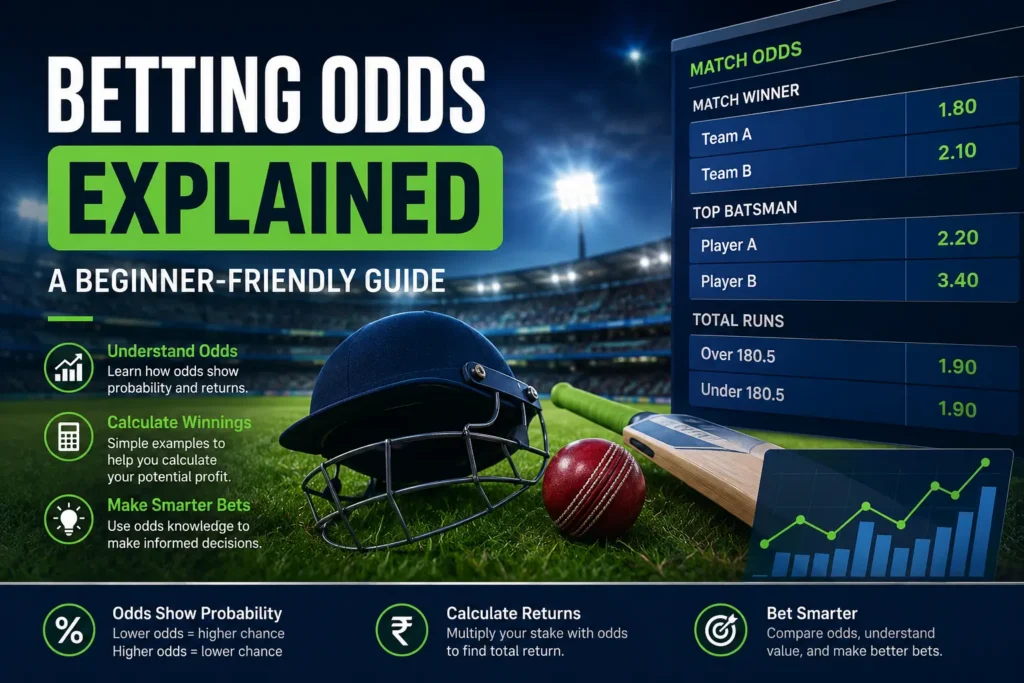
Betting Odds Explained: A Beginner-Friendly Guide
If you’re new to online betting, one of the first things you’ll notice is a set of numbers displayed next to teams, players, or events. These numbers are called betting odds. Understanding betting odds is important because they help you determine potential winnings and the probability of an outcome.
In this guide, we’ll explain betting odds in simple language so that beginners can understand how they work and why they matter.
What Are Betting Odds?
Betting odds represent the likelihood of an event happening and determine how much money you can win if your prediction is correct.
For example, if a cricket team has odds of 2.00, it means a successful ₹100 bet could return ₹200 in total, including your original stake.
Odds serve two main purposes:
- Show the probability of an outcome.
- Calculate potential returns.
Why Betting Odds Matter
Before placing any wager, it’s important to understand the odds because they directly affect your potential payout.
Higher odds generally mean:
- Lower probability of winning.
- Higher potential return.
Lower odds generally mean:
- Higher probability of winning.
- Lower potential return.
Understanding this relationship can help you make more informed decisions.
Types of Betting Odds
There are three common formats used around the world.
1. Decimal Odds
Decimal odds are the most beginner-friendly format.
Example:
- Odds: 2.50
- Stake: ₹100
Calculation:
₹100 × 2.50 = ₹250
Total Return = ₹250
Profit = ₹150
Decimal odds already include your original stake, making calculations simple.
2. Fractional Odds
Fractional odds are commonly used in some regions and are written like:
5/1
This means you win ₹5 for every ₹1 staked.
Example:
- Stake: ₹100
- Odds: 5/1
Profit = ₹500
Total Return = ₹600
3. Moneyline Odds
Moneyline odds are popular in American sports.
Positive Example:
+200
A ₹100 stake would generate ₹200 profit.
Negative Example:
-200
You would need to stake ₹200 to earn ₹100 profit.
For beginners, decimal odds are usually the easiest format to understand.
How Odds Reflect Probability
Odds are closely linked to probability.
For example:
- Odds of 1.50 suggest a strong favorite.
- Odds of 2.00 suggest a balanced contest.
- Odds of 5.00 suggest an underdog.
Bookmakers use complex calculations and market data to set these numbers.
However, odds can change depending on:
- Team news
- Player injuries
- Market demand
- Match conditions
Example Using a Cricket Match
Imagine a T20 match:
Team A: 1.80
Team B: 2.10
If you place ₹100 on Team A and they win:
₹100 × 1.80 = ₹180
Total Return = ₹180
Profit = ₹80
If Team B wins:
₹100 × 2.10 = ₹210
Total Return = ₹210
Profit = ₹110
This example shows how different odds affect payouts.
Common Mistakes Beginners Make
Ignoring Probability
Many beginners only focus on potential winnings and ignore the actual likelihood of success.
Chasing High Odds
Higher odds may seem attractive, but they often represent less likely outcomes.
Not Comparing Markets
Odds can vary between platforms. Comparing available options may help identify better value.
Betting Without Understanding the Numbers
Learning basic odds calculations can prevent confusion and improve decision-making.
Tips for Understanding Betting Odds
- Start with decimal odds.
- Practice calculating returns manually.
- Focus on probability rather than only profits.
- Learn how odds move before major sporting events.
- Avoid making decisions based solely on large potential payouts.
Final Thoughts
Betting odds are one of the most important concepts for beginners to understand. They help estimate probability and calculate potential returns. Whether you encounter decimal, fractional, or moneyline odds, learning the basics can make sports betting easier to understand.
The key is not to focus only on possible winnings but also on the probability behind the numbers. With a solid understanding of betting odds, beginners can better evaluate sporting events and make more informed decisions.
Frequently Asked Questions
What are betting odds?
Betting odds are numerical values that indicate the probability of an outcome and determine potential returns.
Which odds format is easiest for beginners?
Decimal odds are generally considered the easiest because calculations are straightforward.
Do higher odds mean higher winnings?
Yes. Higher odds typically offer larger potential returns but often represent less likely outcomes.
Can betting odds change?
Yes. Odds can change due to injuries, team news, market activity, and other factors.
Why should beginners learn betting odds?
Understanding odds helps beginners calculate returns, assess probability, and make informed decisions.